

You don't need to spend a fortune to build a solid training setup. Our squat racks under $500 are built to last, lifter-tested, and perfect for your home or garage gym.


Yes. Both racks here are built with steel gauged for real training loads, rated for 450 lb, and used by serious garage gym lifters every day. The price reflects a focused design (no cable system, no Smith machine, no extras) not a compromise on the core function of squatting and pressing safely.
An open rack has two uprights and a pull-up bar. This gives it a smaller footprint, makes it easier to load from the sides, and is perfectly capable for squats, bench press, and pull-ups. A squat cage has four posts with built-in safety bars that catch the bar if you fail a rep. Same price, different priorities: space efficiency versus built-in safety margin.
Not necessarily. If you train with a reliable spotter on every heavy set, an open rack covers everything you need. If you train alone (which is most sessions for most garage gym lifters) built-in safety bars on the cage are worth prioritizing. Failing a squat or bench press alone without a catch point is a situation worth avoiding entirely.
Yes. Both Garage Series racks are designed specifically for residential garage gym use and fit comfortably in a standard one-car garage bay. The open rack has a smaller footprint if space is tight. Measure your ceiling height before purchasing. You'll want enough clearance above the pull-up bar to use it comfortably.
Yes. Both racks are compatible with standard squat rack attachments; dip stations, cable pulley systems, spotter arms, and more. The rack you buy today isn't a ceiling on what your gym can do. It's a foundation you can build on as your training evolves and your budget allows.
Start with the cage if you're training alone. The built-in safety bars remove the risk from heavy solo sets, which matters more when you're still learning movement patterns and testing your limits. Start with the open rack if you have a training partner and floor space is the priority. Either way, $349 gets you a rack that will outlast your reasons for upgrading it.
Squat Racks Under $500: Solid Training Without Overpaying
The best squat rack for your garage gym isn't the most expensive one, it's the one that's built well, fits your space, and handles the training you're actually doing. Under $500, you can get a legitimate squat rack that handles heavy squats, bench press, pull-ups, and years of consistent use. You don't need to spend more than that to get started, and for most garage gym lifters, you never will.
We carry two options under $500. Both are $349. Both are built to the same standard. The difference is the shape of the frame, and which one fits your training better.
What to Look for in a Cheap Squat Rack
Cheap squat rack is a phrase that means two different things. It can mean a rack that's affordable. It can also mean a rack that's flimsy, poorly made, and going to wobble under any real load. The two don't have to go together, but knowing what separates them matters before you buy.
- Steel gauge is the first thing to check. Thicker steel means a more rigid, stable rack under heavy loads. A rack built with thin-walled tubing will flex and wobble when you start loading it seriously, which is both annoying and unsafe. Our Garage Series racks are built with steel that handles real training weights without moving around on you.
- Weight capacity is the second thing. A rack rated for 450 lb or more covers the vast majority of garage gym lifters for the full life of the rack. If the capacity listed seems low, that's a sign the steel gauge probably is too.
- Bolt-to-floor option is the third. Any squat rack becomes more stable when it's anchored to the floor. Both options here include bolt-down capability for lifters who want that extra security, particularly for heavier squats and overhead press where a shifting rack is a real problem.
What you don't need at this price point is a cable system, a Smith machine, or a built-in functional trainer. Those are valuable additions, but they belong on a different rack at a different price. Under $500, you want something that does the foundational movements well and does them safely. That's what these racks are built for.
Two Options. Both $349. Here's the Difference.
Squat Rack: Garage Series with Pull Up Bar — $349
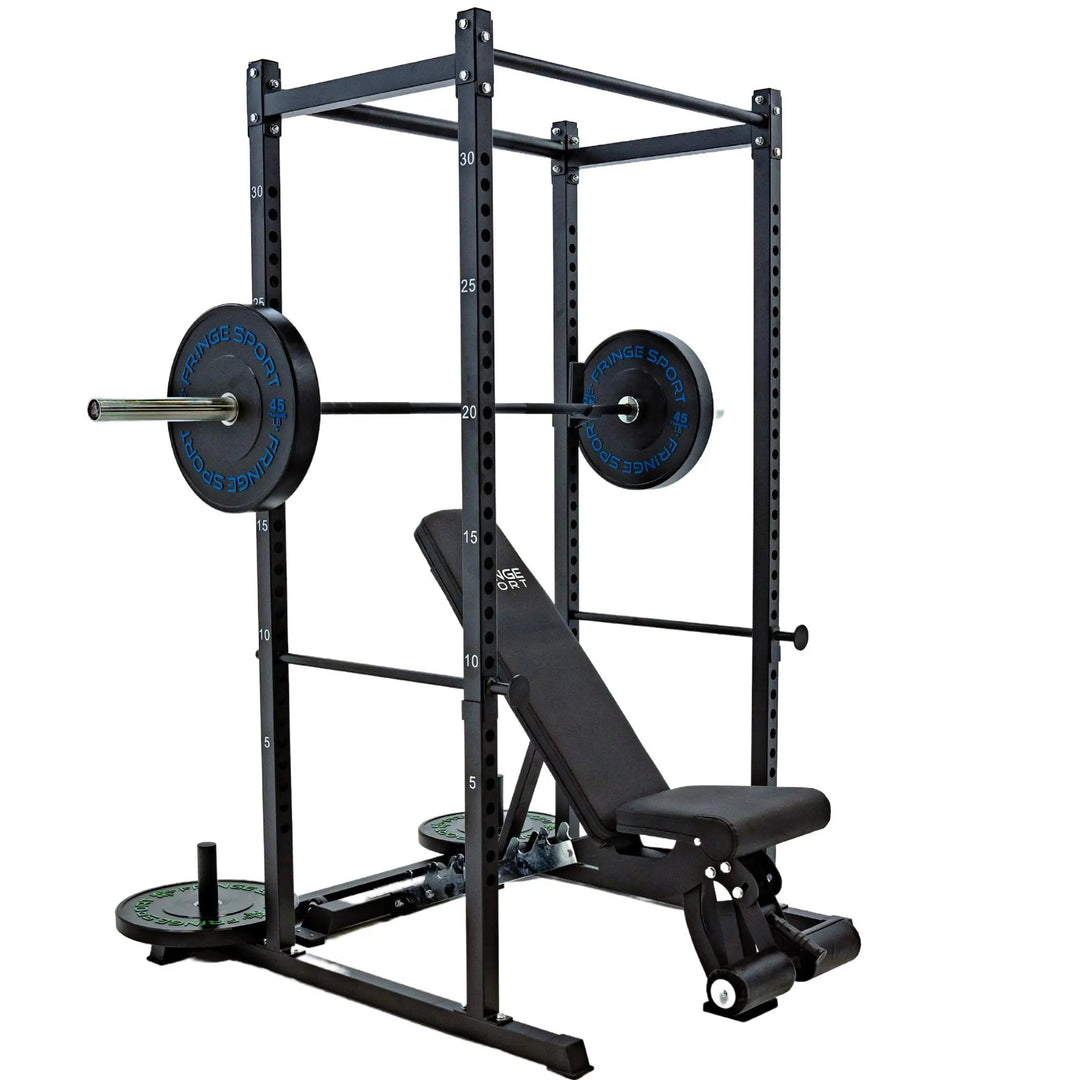
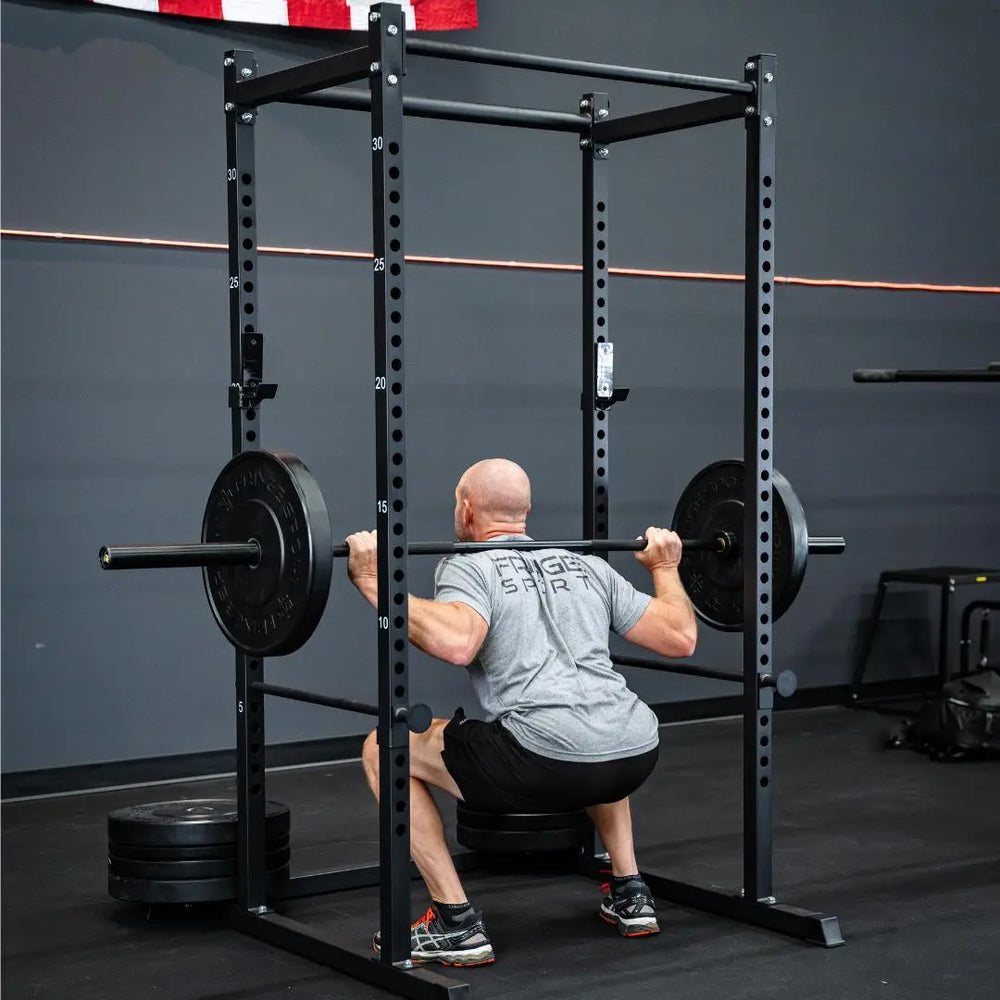
The Garage Series Squat Rack is an open-design two-post rack with a pull-up bar across the top. It's the most space-efficient option in the lineup, a smaller footprint means more room to move around it, more room for other equipment, and easier loading and unloading from the sides. The pull-up bar is integrated into the frame, so you're getting two foundational movements, squatting and pull-ups, in one compact unit.
With 249 reviews and a consistent track record in garage gym builds across the country, it's one of the most proven affordable squat rack options we carry. Lifters who prioritize floor space and simplicity consistently land here.
Squat Cage: Garage Series — $349
The Squat Cage is a four-post power cage design with safety bars built in. Same price as the open rack, different frame. The cage adds two things the open rack doesn't have: four-sided structural rigidity and built-in safety catches that let you bail on a squat or bench press without a spotter.
For lifters who train alone and push near their limits regularly, that safety margin is worth prioritizing. The cage is slightly larger than the open rack, but the added peace of mind on heavy solo sets is real. With 59 reviews and growing, it's the right call for lifters who value that security over a smaller footprint.
Open Rack or Cage: Which One is Right for You?
The honest answer comes down to two questions: how much space do you have, and do you train alone?
If you're working with a tight footprint and you train with a partner who can spot you, the open rack is the better fit. Smaller, cleaner, and every bit as capable for the core movements.
If you train alone and you squat or bench press near your limit with any regularity, the cage is the better call. Safety bars mean you can push hard without a spotter present, which in a garage gym is most sessions for most lifters. The cage design also adds rigidity that some lifters prefer under very heavy loads.
Both racks accept standard squat rack attachments, so whichever you start with, you can expand what it does over time. Add a cable pulley system, a dip station, a belt squat attachment, or magnetic hitch pins as your training evolves. The rack you buy today doesn't have to be the rack you're limited to tomorrow.
The Best Affordable Squat Rack Is the One You'll Actually Use
The best affordable squat rack isn't a compromise. It's a deliberate choice to buy something well-built, fit for purpose, and priced honestly, so you spend your money on training instead of on features you don't need yet.
Both racks here are backed by our 365-day guarantee and free returns. If something isn't right, we fix it. No drama.
Questions about which one fits your space or your training? Call or email us and we'll give you a straight answer.