


We hear it all the time: belt squats are for people who are too weak, too inexperienced, or too afraid to do “real” squats with a barbell on their back. And that idea couldn’t be further from the truth.
Here at Fringe Sport, we love belt squatting—not because it replaces barbell squats for everyone, but because it solves real problems that even the strongest lifters in the world run into. Belt squats weren’t invented as a shortcut. They were created by hardcore lifters for very practical reasons: to keep training legs hard while managing fatigue, injuries, and the constant reality of spinal loading.
So let’s dig into two things: first, why belt squats were created, and second, why you should consider using a belt squat in your training. As we go, you might want to keep in mind that we do sell what our clients call “built like a tank”: the Mammoth Belt Squat (With Free Belt), and we encourage you to check it out after this article.
The history of belt squats (and why it’s important)
In the 1960s and 1970s, there was a revolution in Soviet-style weightlifting. That era came with plenty of controversy, and it’s no secret the Soviet programs were infamous for the “pharmaceutical” side of performance. But what’s also true is that those programs were relentless about training: heavy weights, high frequency, and—above all—volume, volume, volume.
Even with world-class, Olympic-level lifters, they ran into a hard limit: there’s only so much heavy squatting you can do before injury risk climbs or central nervous system fatigue starts to choke your progress. Squatting is an incredible movement, but it’s also brutally taxing on recovery. It hits the lifter’s overall system, and most importantly, it loads the spine hard.

So those lifters and coaches started experimenting with ways to keep training the legs hard and getting the benefits of squatting—without all the downsides that come with heavy spinal loading and high CNS demand. They also wanted ways to keep lifters training through injuries. Shoulder issues are common at high levels of Olympic lifting and powerlifting, and when the shoulders are beat up, a traditional back squat can go from “hard” to “nearly impossible” in a hurry.
If that sounds familiar, it should. Think about the safety squat bar. Nobody serious calls the SSB a cheater tool or a tool for weak people. It exists because strong lifters needed a way to squat hard while working around limitations. Belt squats come from that same mindset: train hard, keep progressing, and don’t let one limiting factor shut down your lower-body work.
Then, in the 1980s and beyond, you saw the rise of Louie Simmons and Westside Barbell. Louie and his crew were digging into training manuals and methods from Bulgaria and other ex-Soviet states, and they helped bring a lot of those ideas into the wider strength world. The belt squat was one of them—right alongside other now-iconic tools like the reverse hyper.
Westside helped popularize belt squats in the 1990s. Through the 2000s and into the 2010s, belt squats started crossing over into more “normal” gyms. What used to be mostly found in hardcore powerlifting rooms (and some Olympic weightlifting gyms) became something more people tried—and then kept using—because the benefits are hard to ignore once you feel them.
Train the legs hard—spare the spine
Almost every major benefit of belt squats rolls up into one simple idea: you can train your legs hard while sparing your spine.
The first big advantage is straightforward: you can build serious leg strength without spinal loading. With a belt squat, the weight is suspended from the waist and below. You’re not compressing your spine under a bar. If your spine is healthy, that can be a smart way to manage wear and tear. If you’re dealing with back issues—think irritated discs or persistent low-back pain—it may be one of the only ways you can still train a true squatting pattern hard.
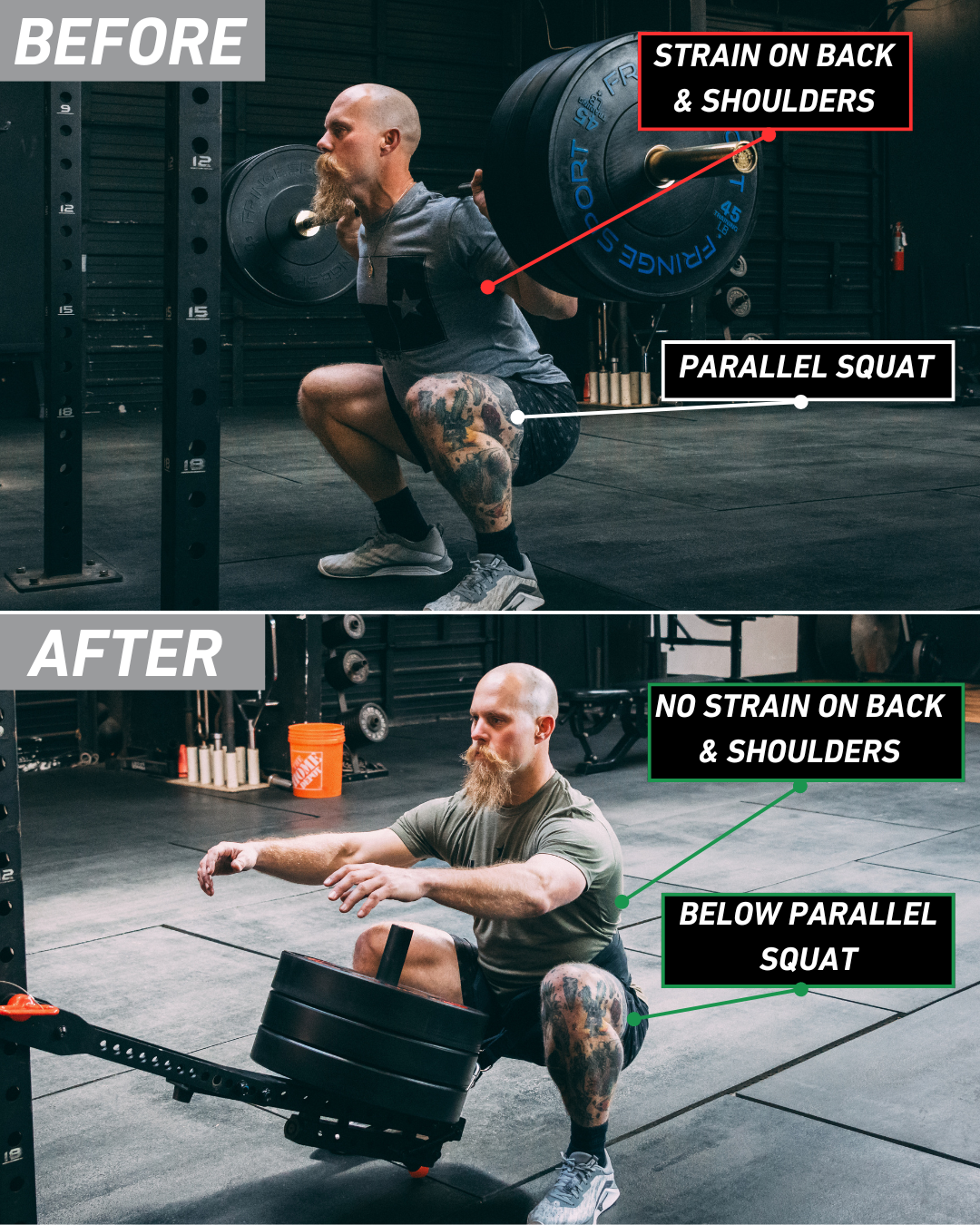
Another great advantage is, if you’ve removed that heavy spinal load, you can often increase training volume and recover faster. A barbell squat is a fantastic strength builder, but it’s also expensive in terms of fatigue—especially when you start pushing intensity and volume. A belt squat tends to be “cheaper” on the system while still being brutally effective on the quads and glutes. That creates more options: you may be able to train legs more often, add more quality reps, or push hard without feeling like your whole body got run over.
Third, Belt squats are simple to teach and generally safer to fail. Heavy barbell squats can be safe, but they require good setup, good judgment, and usually safeties or spotters—especially as you approach max effort. A belt squat changes the failure mode completely. If you miss a rep, you can simply squat down and let the weight come to rest. You’re not stuck under a bar, you’re not trying to re-rack something while your form collapses, and you’re not relying on perfect timing from a spotter.
That simplicity also matters for newer trainees. Teaching someone to squat well can take time. And it’s common for brand-new lifters to feel shoulder discomfort or upper-back fatigue from bar positioning long before their legs are truly challenged. With a belt squat, you can get someone moving in a recognizable squatting pattern fast—often in under a minute—without turning the session into a mobility assessment.
Additionally, belt squats are more versatile than people might expect. You can change the feel of the movement by changing your torso position and stance. You can use the setup for split squats and lunges. And depending on the unit, you can often do movements that aren’t “squats” at all—different deadlift variations, rows, even press variations like a Viking press setup. One compact tool can open up a lot of training options.
Because belt squatting reduces the total “wear and tear” from heavy spinal loading, it can help you train longer—later in life and over more years of consistent progress. That doesn’t mean you should never barbell squat. It means you can be smarter about how often you pay the cost of heavy compression when there’s another way to get great work in.
Finally, belt squat machines (and especially rack-attachable options) can be surprisingly compact and cost-effective. Many dedicated belt squat units are big, expensive, and take up a serious footprint. A rack attachment can deliver a lot of the function without consuming your entire gym layout—or your entire equipment budget.
That’s also why the “belt squats are for wussies” line falls apart so quickly. Belt squats were developed by lifters who wanted to lift more, recover better, and keep training when their bodies inevitably got beat up. That includes everyone from a person learning how to squat for the first time to someone pushing the frontiers of human strength.
If you want to add belt squats to your training without dedicating a huge amount of space (or money) to a standalone machine, take a look at the Fringe Sport Mammoth Belt Squat (With Free Belt). It’s designed to be compact, durable, and versatile, and it’s built to integrate with the rack you already have—so you can keep your training simple while still leveling up your lower-body work.
Lift heavy. Lift happy.